Septic in Hattiesburg, without the guesswork
Straight answers on how Mississippi actually permits a septic system, why the water meter is the thing that triggers all of it, and what the Pine Belt's clay and rainfall do to a drainfield.
- 41-67-3The governing statute
- 5 ftBoring depth
- 100 ftField to any well
- 24 inMin. to water table
- Sourced from published rules
- We do not sell septic work
- We refer only to licensed pros
- Never a charge from us
Silt, clay, and far too much rain
Almost every argument about a septic system is really an argument about soil. Get that part right and the rest of it is paperwork.
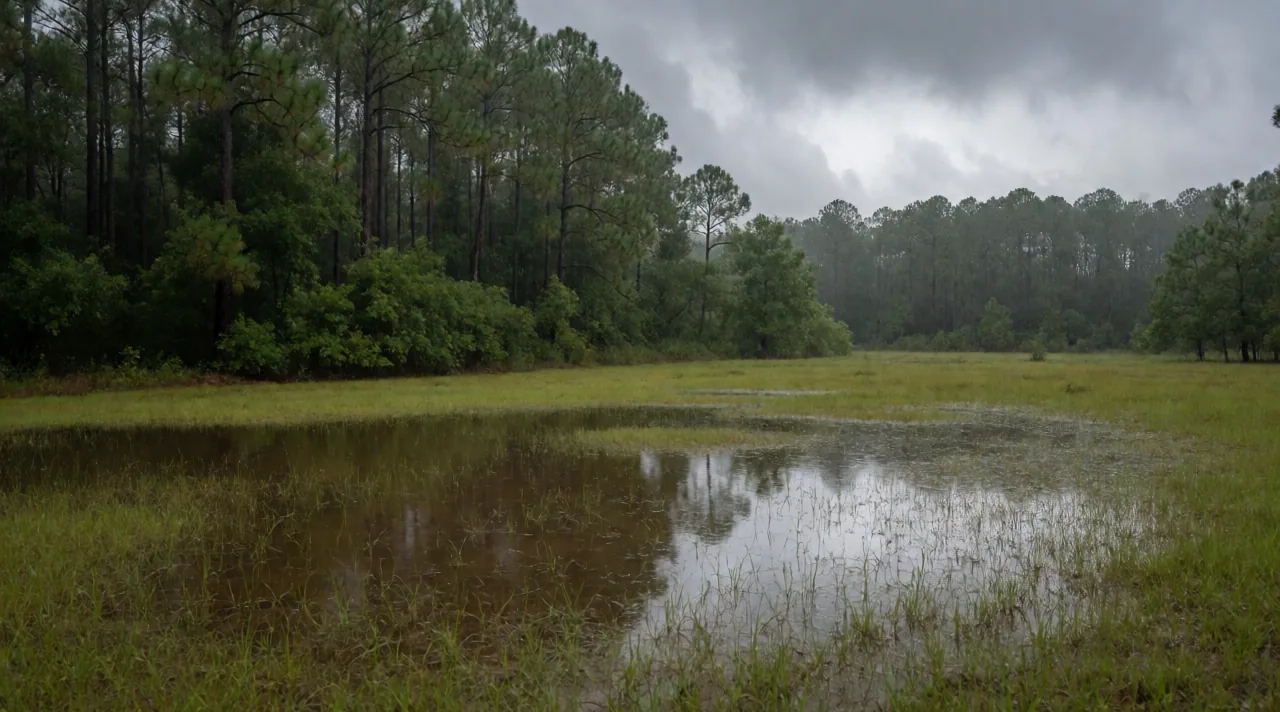
The Pine Belt does not have Gregg County's sand. Around Hattiesburg the common profile is a silt loam or fine sandy loam over a dense clay or fragipan, and the region takes well over fifty inches of rain a year. That combination is the worst case for a septic system: water arrives faster than the ground can take it, and the layer that would normally carry it away is the one that will not let water through. What actually gets measured is not the clay itself but how high the water sits above it in a wet season.
A conventional system is three jobs in a row, and only the first two are equipment. The tank separates, the distribution box shares the flow out, and then the soil itself does the treating. When people say a septic system failed, what they nearly always mean is that the third part stopped working, because the ground was never able to do the job it was being asked to do.
The test that decides everything
A licensed evaluator is not guessing and is not consulting a map. They put holes in your ground and watch what water does. Two lots on the same street can come back with completely different answers, which is exactly why nobody can quote you honestly over the phone.
What that leaves you with
In Mississippi the question is less often "clay or no clay" and more often "how much unsaturated soil is there above the wet layer". The evaluator is looking for grey mottling, chroma 2 or less on the Munsell chart across at least two percent of the soil volume, because that is the mark the water table leaves behind in a wet season even when you are standing there in a dry one. If that mark is shallow, a conventional trench has nowhere to go and the design moves to a mound or an advanced treatment system instead.
Not us, not a contractor on the phone, not a soil survey. The design follows the boring log. That is why the evaluation is the first thing you pay for, and why a quote given before one is worth precisely nothing. Get local pros to quote the evaluation →
What it costs
Ranges, not a price list. Mississippi does not publish installed costs and neither do we. Where a job lands inside these bars is decided almost entirely by what the soil boring finds, because that is what dictates whether you are installing a trench, a mound, or a treatment plant.
Where to start
What On-Site Wastewater Really Costs Around Hattiesburg
Realistic 2026 cost ranges for Forrest and Lamar County, and why the soil boring, not the house, is what decides whether you are buying a trench.
The Soil and Site Evaluation, and What It Is Looking For
MSDH evaluators bore to five feet looking for grey mottling at chroma 2 or less: what that means, and why a dry August tells you nothing.
The Water Meter Rule: Why Septic Comes Before Water
In Mississippi the Permit/Recommendation is what gets you a water meter, and Rule 1.2.2 counts a change of ownership as a connection event.
How a Mississippi On-Site Permit Actually Works
The MSDH permit path under Title 15 Part 3 Subpart 77: the Notice of Intent before you build, the soil and site evaluation.
Areas we cover
Hattiesburg
The city is largely sewered, but the growth at the edges and across the county line is not.
Petal
East across the Leaf River in Forrest County. A lot of established housing on private systems.
Oak Grove
Lamar County, and one of the fastest-growing parts of the area. New builds here mean new Notices of Intent.
Purvis
Lamar County seat. Larger lots, mostly on-site treatment.
Sumrall
Rural Lamar County. Well and septic is normal, which raises the separation distances that apply.
Lumberton
Southern Lamar County, lower and wetter, where water table depth does the deciding.
Common questions
Do I need a permit to install or replace a system?
Yes, and it is not a formality. the Mississippi State Department of Health is the permitting authority statewide through its Division of On-Site Wastewater, so unlike Texas there is no county office writing its own rules. Work that goes in without one is work that has to come back out, and it will show up again the day you try to sell.
How much does a new system cost here?
For most local lots the honest answer is a range, not a number. The bars on our cost page show what each system type typically runs installed. Where your job lands inside them is decided by the soil boring, not by the house.
How long does the whole process take?
Weeks, not days. The evaluation, the design, the review and the inspection each wait on somebody else's calendar. Homeowners who start early are the ones who avoid delaying a build or a closing.
Can you tell me what my lot needs?
No, and neither can anyone else who has not dug a hole on it. Soil maps are a starting point and nothing more. The design follows the boring log, which is why the evaluation is the first thing you pay for rather than the last.
Request a septic quote
We read every request and pass it to a licensed local professional covering Forrest County where one is available. We are still building our list of professionals here, so we cannot promise one is available or say how quickly they will respond.